Good day
Ingredients
A good breakfast, of which you may want to think a day before. To have something delicious on your plate you may look for inspration to other recepies (particularly bread and Hepezopf seems to be particularly adequates). Besides that, you do not need anything else, it’s one of these rare occasions when you may get something out of (almost) nothing.
Four steps procedure
The first thing at the morning, before you put any limb out of the bad, smile. Simply, just make a smiling face. There is scientific evidence that a mere smile may trigger release of neuropeptides that are responsible for good mood (prolactin, vasopressin, and oxytocin, e.g. (Martin et al. 2018)).
When getting out of bed (the leg you use first does not matter, you do not need to be careful with which leg you get up first, it is a myth!), gently stretch your all joints. It does not have to be (and should not) an extensive exercise, just a minute of stretching is more than enough.
Take a good breakfast and celebrate the moment. Don’t not eat just for calories, eat for the pleasure of eating.
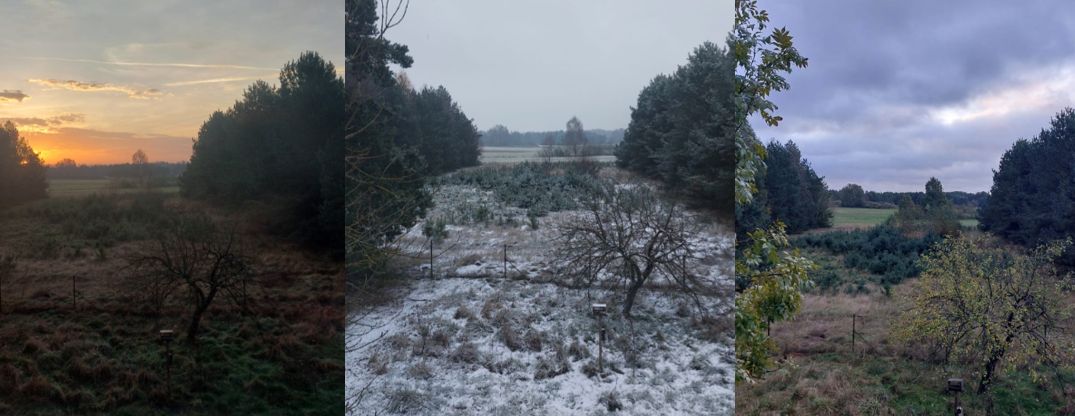
Whatever you plan to do during the day, prepare yourself for it and go outside. If you are staying at home (I am jealous), before starting anything, open the window. The idea is that you spent outside a minute just listening sounds, smelling scents and looking at the sky (does not have to be blue) or trees (if you have them around).
After that you are ready for the challenges of the day.
Make a habit of all this and have many good days!
References
Footnotes
French expression, that could be translated as “That’s the life” (in Spanish: “Asi es la vida”, in Polish: “Takie życie…” - suspention points are quite important here, in Russian: “такая жизнь”; in Dutch: “Zo is het leven nou eenmaal”, in German: “So ist das Leben”, in Italian: “è la vita”, in Norwegian: “Sånn er livet”).↩︎